WHO WE ARE

Dr. Diána Sipőcz and Iván Bayer
Founders
Dia
I began exploring the subject of dying in 2002; initially, I studied hospice volunteer management from an economic perspective (MÜTF), and then spent five years as a hospice volunteer at patients’ bedsides.
As time went on, my interest in the subject of death only grew stronger, though my perspective changed along with my field of specialisation. As a cultural anthropologist, I researched the attitudes towards death among Krishna-conscious devotees in Hungary (ELTE). Following this, during a half-year of research in India and a half-year in Indonesia, I examined Vaishnava Hindu funeral rites (BHF).
Upon my return to Hungary, I became interested in understanding the spiritual aspects of accompanying the dying, so I undertook postgraduate training as a mental health pastoral counsellor (SE).
I have just finished my PhD studies at Semmelweis University, researching end-of-life spirituality. I believe it is important to raise awareness of end-of-life spirituality and to introduce practices into end-of-life care that contribute to improving the quality of life for the dying.
Iván
I believe that the best way to prepare for death is to live a good life – according to one’s own values. I regard the foundation’s work to ensure the dignity of dying as a mission.

Dr. Katalin Hegedűs
the Chair of the Board of Trustees
I have been working at Semmelweis University as a lecturer and researcher for 39 years. I obtained my habilitation in health psychology. At the Institute of Behavioural Sciences, I lead the Thanatology research group, which examines the ethical, communicative and mental health aspects of death, dying and bereavement. My Thanatology course has been running every semester since 2004 for students at the Faculty of General Medicine. To date, I have published a total of 539 scientific papers.
I became involved in hospice work in 1992 as a student of Alaine Polcz. As one of the founding members of the Hungarian Hospice and Palliative Care Association, I took on a role primarily in national organisational and training tasks and in establishing international relations. I carry out my support work as a mental health professional, family therapist, and hospice and bereavement counsellor with seriously ill patients and those who are grieving, within the framework of the Antropos Centre for Mental Health Methodology.
In my work, I consider it important to respect and uphold the dignity of seriously ill patients, to adhere to the true principles of hospice care, to practise genuine teamwork, and to foster a collegial, mutually supportive organisational spirit.
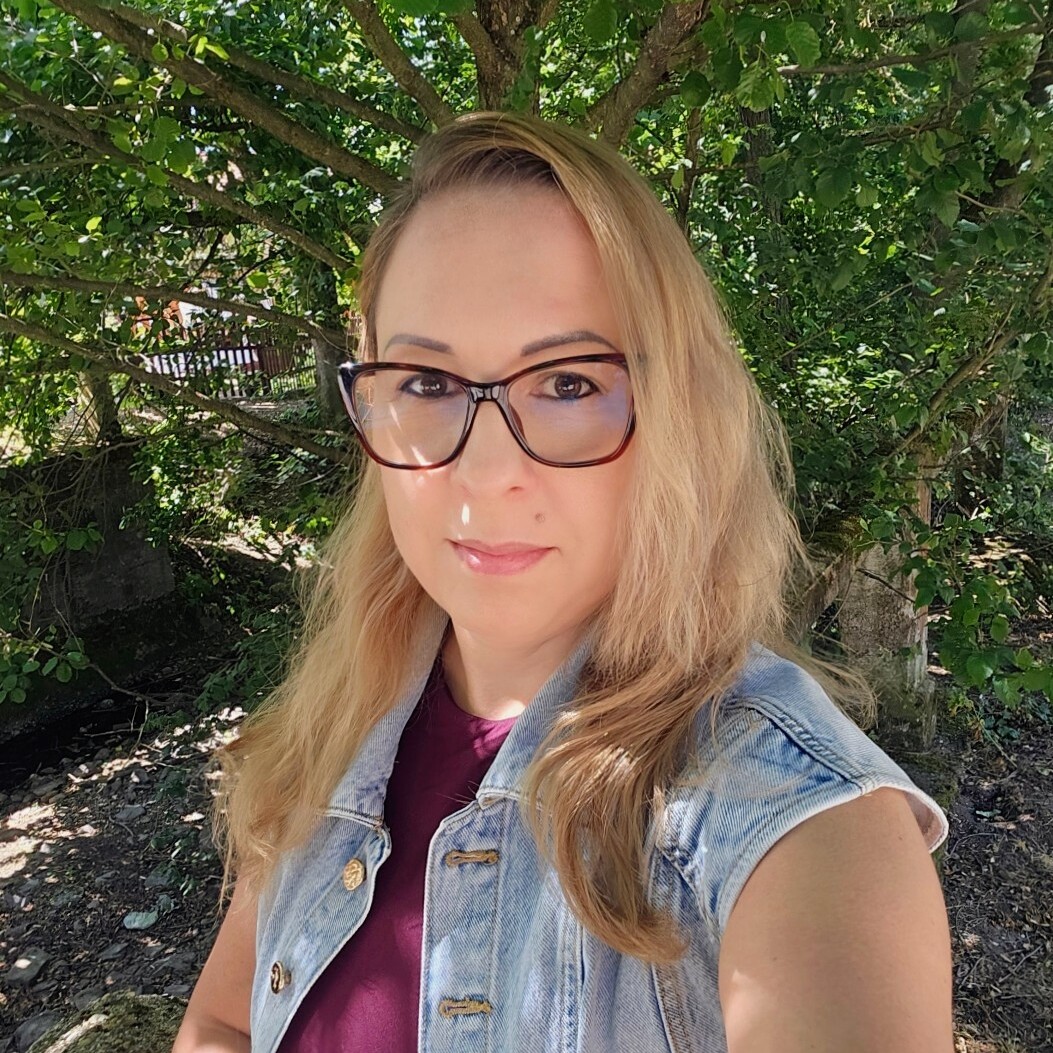
Tímea Bokorovics
Curator
For a long time, I would never have imagined that it would be a complex grieving process – stemming from a family tragedy that, for nearly two decades, had seemed almost unbearable and had crippled practically every aspect of my life – that would ultimately light the way to my true calling. It was this difficult experience that ultimately led me to discover the field and ethos that truly belong to me: hospice and palliative care.
At present, I work full-time as a mental health professional, hospice coordinator and bereavement counsellor in a hospital hospice ward, but my other activities are all linked to this field as well. Also as a mental health professional and bereavement counsellor, I work with seriously ill patients and their families in hospice home care, whilst also working with bereaved individuals on a one-to-one basis. I regularly organise and deliver talks on the above topics, primarily for healthcare professionals.
Preserving the dignity of patients – and others affected – is a cause close to my heart; it was with this aim in mind that I established the ‘Dignity Workshop’ event, which will continue to be available to all interested parties as part of our Foundation’s programme.
I consider it a great honour to be able to participate in the work of the Dignity Foundation as a curator. My shared aim with my colleagues is to raise public awareness of human dignity – as our main area of research and an issue of paramount importance – as much as possible, both amongst healthcare professionals and the general public.
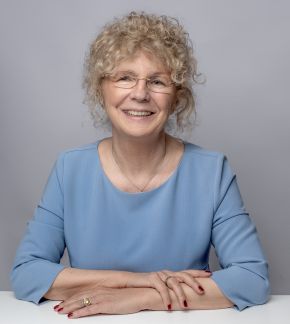
Dr. Erika Borbényi
Curator
I began my medical career as a general practitioner, and even then I was deeply concerned with the holistic nature of healing – which heals the person, not just the illness. In 1986, I joined the work of the Hungarian Mihály Bálint Society, and for many years I attended the Bálint group, which was led by two wonderful doctors, Dr Gyula Császár and Dr Endre Schnell. It was there that I first met Alaine Polcz, who invited me in 1993 to become a doctor for the newly established Hungarian Hospice Foundation. I learnt a great deal from her and also from my patients, whom I cared for as a doctor with the Foundation’s home care team. In 1994, I had the honour of taking part, alongside a group of my colleagues, in a study trip to America lasting a few days, at the invitation of Buffalo Hospice. There, we learnt a great deal about respect for life and the preservation of human dignity. In 1998, I began working in the Oncology Department at Semmelweis University, where I became part of the students’ practical communication training – primarily focusing on delivering bad news and communicating with cancer patients in a critical condition. I also regularly give lectures on the same subject as part of the Thanatology course at the Institute of Behavioural Sciences. I give lectures to colleagues undergoing residency and specialist training on what to do during the final stages of life, our mindset and approach, palliative care, and, above all, the preservation of human dignity. In 2022, I was appointed by the management of the Department of Internal Medicine and Oncology to head a newly opened Hospice and Palliative Care Unit. I am currently working in an oncology care unit, and it is a great honour, as a trustee of the Dignity Foundation, to be able to contribute from this position to ensuring that human dignity is an integral part of our everyday lives.

Dr. Csilla Busa
Curator
It was whilst working at the Department of Hospice and Palliative Care at the University of Pécs that I first came into contact with end-of-life issues, more than ten years ago. Alongside domestic and international research in the field of end-of-life care, I believe it is important that a supportive approach and best practices that can be applied in Hungary should be integrated into patient care as soon as possible when treating patients with a limited life expectancy.
The topic of my doctoral research was advance care planning, which goes a long way towards ensuring that patients receive end-of-life care in accordance with their wishes. Many of our patients have already made use of advance care planning over the years, and we also teach it to our students so that as many people as possible can access care that is tailored to their needs and helps to preserve their human dignity at the end of their lives.

Dr. Zsuzsanna Prezenszki
curator
My name is Dr Zsuzsanna Prezenszki, and I am the founder and clinical director of the ‘In Harmony for Cancer and Chronic Patients’ Foundation. I graduated from the University of Medicine in 1992, after which I qualified as a specialist in psychiatry, psychotherapy and clinical pharmacology. I spent 10 wonderful years working in an acute psychiatric ward, but my career truly came into its own when I discovered the field of psycho-oncology.
Since then, I have been working partly in the public sector and partly as a private practitioner, and I also contribute as an external consultant to several foundations, providing individual and group therapy for cancer patients, as well as training professionals.
Ever since then, one of the most wonderful adventures of my life has been unfolding – sitting down with people day after day, talking about this and that, about life and death, about turmoil and balance, about suffering and happiness. (All the knowledge and experience I have gained along this path were complemented by a unique experience when I underwent surgery for breast cancer in the summer of 2022. This new experience has further enriched my understanding of the balance between body and soul, and of maintaining good health.)
I was delighted to accept the honourable invitation from the Dignity Foundation.
It is my belief that illness – any serious medical condition – is not merely a disruption of physical functions, but also creates a situation of great emotional vulnerability.
A diagnosis affects every level of one’s existence, and help is only complete when it addresses the whole person.

Dr. Éva Zsák
curator
As a researcher and an expert in thanatology and bioethical issues, I focus primarily on the characteristics of grief associated with perinatal loss, both for the families affected and for the professionals who come into contact with them to provide support and care. I obtained my PhD at the Doctoral School of Mental Health Sciences at Semmelweis University, under the supervision of Dr Katalin Hegedűs. During my undergraduate studies, I completed the volunteer training programme run by the Hungarian Hospice and Palliative Care Association, and I also took part in the bereavement counsellor training programme organised by the Napfogyatkozás Association. During my doctoral studies, I took part in the postgraduate programme in Death Studies at the Università degli Studi di Padova, Italy as both a guest lecturer and a student; I subsequently completed the postgraduate programme in perinatal clinical psychology at the Università degli Studi di Brescia, Italy as well as the specialist training programme in Perinatal Palliative Care at Columbia University, New York.
I am a member of the Perinatal Loss Working Group of the Hungarian Society for Pre- and Perinatal Psychology and Medicine, as well as the Stillbirth Advocacy and Bereavement Working Groups of the International Stillbirth Alliance.
It is a great honour for me to be able to take part in the foundation’s work, as I consider the preservation of human dignity in life’s most fragile moments to be of the utmost importance. My aim is to ensure that an understanding of the dignity of seriously ill patients and care that takes this into account are also reflected in perinatal care, and to help healthcare professionals integrate this knowledge into their day-to-day work.

Anna Békés
Consultant
I graduated from the Department of Hungarian, History and Comparative Literary History at ELTE’s Faculty of Humanities in 1981. I taught at various secondary schools for 36 years, during which time I completed the Anonymus Foundation’s training programme for special needs teachers. I have been retired since 2023, but my diary is always full of tasks, activities, and get-togethers with family and friends. As a very active senior citizen who exercises regularly and enjoys going on outings, I completed the specialisation in active ageing at the Faculty of Public Health at Semmelweis University in 2025. My main areas of interest are the study of the psychological effects of age-related discrimination and the impact of estate liquidation on the bereaved. I believe that the environment we create has an effect on our inner world, and that the psychological processes taking place within us are reflected in our homes and workplaces. This constant interplay of influence and reaction becomes particularly significant in the ageing process, when objects can either aid or hinder our ability to come to terms with our life journey.
I am grateful that the Dignity Foundation has embraced this topic, thus marking the start of an exciting collaborative project.

Judit Schaffer
consultant
I am a physiotherapist, healthcare manager, hospice nurse and coordinator, an ELNEC (End of Life Nursing Education) trainer and instructor, and the founder and director of the Gondoskodás 2000 Care Service. Our service provides rehabilitation and hospice care to those in need in their own homes in the north-western region of Budapest. In Százhalombatta, I work in an outpatient clinic specialising in musculoskeletal rehabilitation and am involved in the teaching and examination of voluntary professional development courses for healthcare professionals. For 17 years, I was a member of the executive committee and, for two terms, chair of the Hungarian Hospice and Palliative Care Association.
In recent years, my interest has turned towards animal-assisted therapies; I work alongside my certified therapy dog, Tazi, I have completed the Vetrehab dog physiotherapy training programme, and I am currently a student on the specialised course in Animal-Assisted Support Activities at the Hungarian University of Agricultural and Life Sciences. Animal-assisted work has a beneficial effect on the well-being of those in our care; it brings more colour to our daily lives and creates a cheerful, relaxed atmosphere for our therapeutic work.
In my work as a physiotherapist, I believe it is important to provide personalised care, which helps those in need to achieve the highest possible level of independence and quality of life.
As a manager, I firmly believe that effective collaboration amongst my colleagues and the continuous updating of our knowledge are the guarantee of high-quality care.
As a dog therapist, I am given the opportunity and scope, both in patient care and in animal husbandry, to promote a dignity-based approach and to foster human–animal relationships built on mutual respect and acceptance.

Attila Balázs Farkas
Secretary
Although several members of my family and my ancestors were teachers or worked in the caring professions, in the early 1990s I did not feel that I should follow in their footsteps, so for a long time I worked in the profit-driven business world. Nevertheless, I have always worked with people and amongst people, whether in retail and wholesale, as an interpreter, in tourism, in children’s holiday camps, or in the fields of company formation, incorporation and accountancy. What has, sooner or later, become essential in all my work is good communication, supportive conversations and a systematic approach based on precise and accurate record-keeping.
Information technolgy has been my hobby since I was young, and I am convinced that, by harnessing its almost limitless potential, it can make our lives incredibly easier.
Today, I endeavour to support service providers and civil society organisations working in the social sector through the experience I have accumulated over decades spent in various sectors, my dedicated work and my personal involvement, with a particular focus on those who support and care for children who are inherently in a more vulnerable position, or those who support and care for the seriously or terminally ill. I consider it important to shape public attitudes and provide education on a broad scale.
I believe that if we approach those who are down-and-out, in need or vulnerable with a sincere desire to help, we will create a better, more humane world!
Copyright © 2024 Méltóságért Alapítvány – All rights reserved